
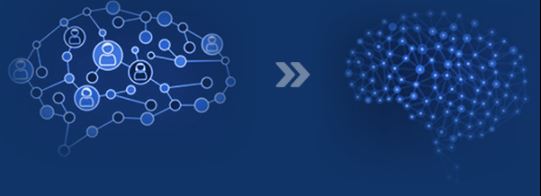
We have recently seen the role played by Big Data, analytics, and AI during the last 16 months in pandemic. We were warned of terrible consequences of the growth of Covid-19 in early March last year, and yet there were delays in lockdown for two weeks because the models did not indicate urgency. According to Richard Self, ‘Data, analytics and models are how we understand the world’ is the current wisdom. Also ‘the data and models do not lie’. ‘We must follow The Science’.
As you all know my interest in Federated learning for healthcare data. Recently, I was advised to look into swarm learning which is allegedly somewhat similar to federated learning but slightly different in how it protects the data. This article is to briefly explain and talk about the differences between federated and swarm learning and how it can be applied to protect sensitive data.
The challenge of shared machine learning is often a concern for medical data. According to the International Data Corporation, global data will grow from 33 zettabytes in 2018 to 175 zettabytes in 2025. Fast and reliable detection of patients with severe and heterogeneous illnesses is a major goal of precision medicine. Patients with leukaemia can be identified using machine learning on the basis of their blood transcriptomes. However, there is an increasing divide between what is technically possible and what is allowed, because of privacy legislation.
To enable the integration of medical data from any data owner worldwide without breaking laws, Swarm Learning-a decentralized machine-learning approach that unites edge computing, blockchain-based peer-to-peer networking and coordination while maintaining confidentiality without the need for a central coordinator, thereby going beyond federated learning, could be the answer!
This article focuses on what swarm learning is and how does it differ from Federated learning.
The swarm acumen or theory is often showed in nature with birds in flight or ants in colonies or in humans with participants in a market economy. Swarm Learning is a decentralised machine learning framework that enables organisations to use distributed data to build ML models by leveraging blockchain technology that facilitates the sharing of insights captured from the data rather than the raw data itself.
Traditional machine learning makes use of a data pipeline and a central server that hosts the trained model. The disadvantage is all the datasets are sent to and from the central server for processing. It is time-consuming, expensive and requires a lot of computing power. This communication can also hurt user experience due to network latency, connectivity and so on. In addition, huge datasets need to be sent to one centralised server, raising privacy concerns.
In swarm learning, the ML method is applied locally at the data source. The approach leverages a decentralised ML approach. It makes use of edge computing, blockchain-based peer-to-peer networking and coordination without any need for one central server to process data. AI modelling is done by the devices locally at the edge (source of the data), with each node building an independent AI model of their own. The network amplifies intelligence with real-time systems with feedback loops that are interconnected.
On the other hand, in Federated learning, model is trained on multiple devices. Each participating device has its own local data record that is not exchanged with other participants. In contrast, with conventional machine learning there is a central data set.
The main difference between federated and swarm learning is that with federated learning there is a central authority that updates the model(s) and with swarm learning that processing is replaced by a smart contract executing within the blockchain. The Updating of model(s) is done by each node updating the blockchain with shared data and then once all updates are in, it activates a smart contract to execute some Ethereum code which collects all the learnings and build a new model (or update the existing model). Thus no node is responsible for updating the model – it’s all implanted into a smart contract within the Ethereum block chain.
Some companies have begun leveraging Swarm intelligence. For example, Italian startup Cubbit has developed a distributed technology for cloud storage that uses swarm intelligence to deliver speed and privacy, with each Cubbit Cell acting like a node in a swarm. Moreover, the maintenance of these systems costs much less as compared to traditional data centres.
Dutch company DoBots specialises in swarm robotics. The company’s project FireSwarm consists of a group of UAVs that specialises in finding dune fires. German start-up Brainanalyzed enables scaling profits and predicting market movements for fintech customers. It combines swarm intelligence with data analytics to improve financial decision making.
Swarm learning is still in its early days, but developing the technology today is recognition of a set of trends that make a new way of thinking vital.
Edge computing, AI and blockchain create a process by which we move from a data flood to kind of hydroelectric power, where the vast amounts of data are directed and put to work, adding, not subtracting, from our lives and what we can do with them.
I am convinced that swarm learning can give a huge boost to medical research and other data-driven disciplines. The current state is just a start. In the future, I see this use of technology in the realms of Alzheimer’s and other neurodegenerative diseases,” Schultze said. “Swarm Learning has the potential to be a real game changer and could help make the wealth of experience in medicine more accessible worldwide. Not only research institutions but also hospitals, for example, could join together to form such swarms and thus share information for mutual benefit.”
 arshadfarhad.io