
Huawei – No, you are at the wrong place…
Data Communication has always been one of my favourite topics and having done my MSc in Mobile and Distributed networks, I find cellular data communication very exciting.
The 5G wireless network has been a topic of discussion in 2019, providing unprecedented speed and capacity compared to previous generations of cellular networks. There is no doubt that 5G has the potential to revolutionize many industries and surely its effects on healthcare should not be underestimated.
I believe, 5G’s fast and latency-free data speeds will drastically change network capacities — allowing for real-time monitoring and telemedicine, while also forming the backbone of bleeding-edge technologies such as robotic surgery and the Internet of Medical Things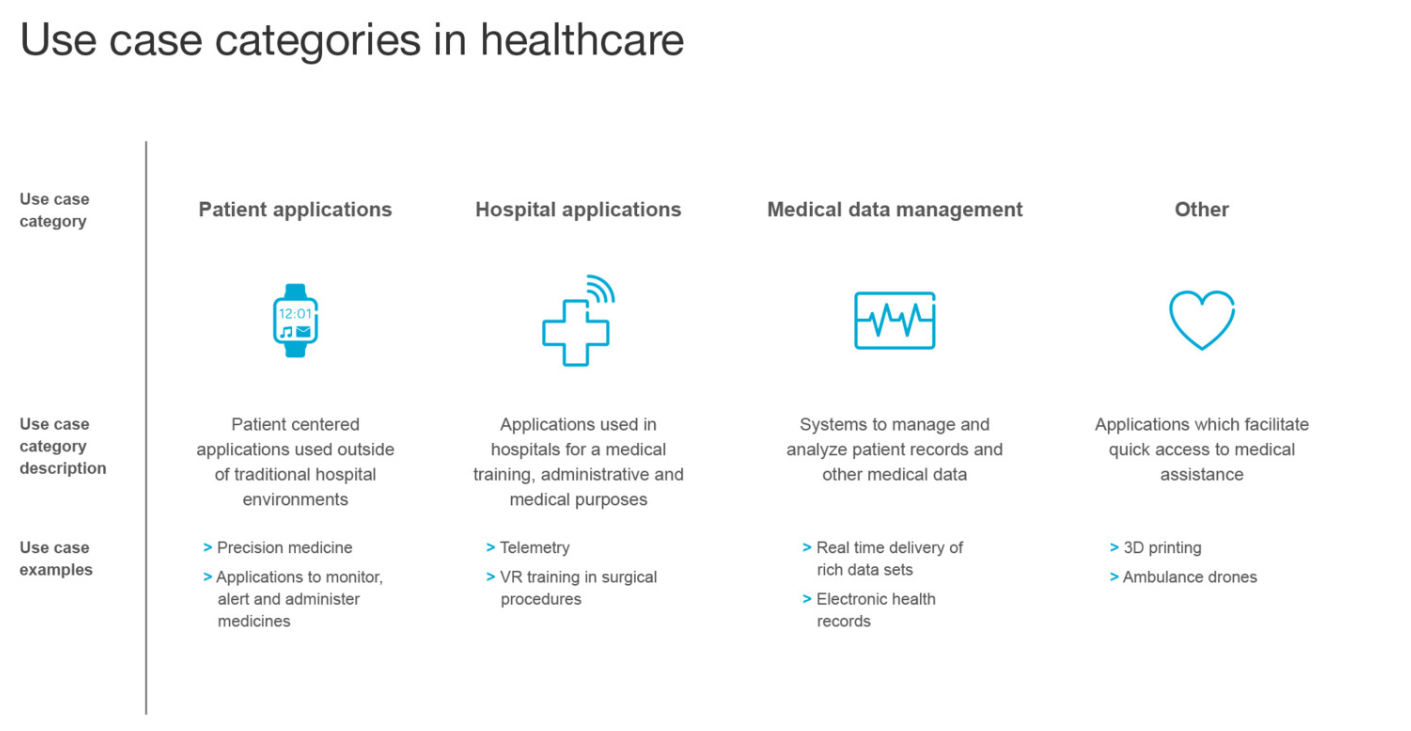
Here are five ways 5G can help healthcare organizations meet the growing demands of digital transformation.
1. Decentralizing the healthcare model
This isn’t a new topic in healthcare, for those who are not aware, this is about providing care “closer to the patient”. Advances in medicine, technology, the rising costs of healthcare, consumerism, and more have encouraged the use of satellite centers. 5G will support this decentralized healthcare ecosystem by helping to make functions more reliable and accessible
2. Reliable, real-time remote monitoring
Despite the benefits, remote monitoring technology usage is limited by the capacity of the network to handle the data. With 5G technology, which has lower latency and higher capacity, healthcare systems can offer remote monitoring for more patients. Healthcare providers can then be confident that they will receive the data they need in real time and can provide the care their patients need and expect.
3. Artificial intelligence
Predictive analytics and AI data are now being used(or going to) to perform key functions like determining diagnoses and deciding treatment plans for patients. For all these, data transfer speeds play a huge role. With the help of 5G, data can be distributed at multiple points of care. This will help enable innovations in early remote diagnoses, remote surgeries, greater transparencies, and improved patient engagement.
4. Telemedicine
Telemedicine requires a network that can support real-time high-quality video, which often means wired networks. With 5G, healthcare systems can enable mobile networks to handle telemedicine appointments, which can greatly increase its effectiveness.
When healthcare systems utilize this technology, patients can often get treated sooner and have access to specialists otherwise not available. It can also allow doctors and other staff members to collaborate more efficiently.
5. AR & VR
While augmented reality (AR), virtual reality (VR) and spatial computing are already being used in healthcare on a limited basis, 5G may eventually further enhance a doctor’s ability to deliver innovative, less invasive treatments. Among 5G’s many ultimate potential applications, some of the most exciting involve its role in simulating complex medical scenarios and enabling alternative treatments for the critically ill.
 arshadfarhad.io