
Recently I was on a middle-east field trip and had opportunity of meeting various representatives from ministries of health and hospital CIOs. It was a great trip and more importantly, I was very surprised by some of the initiatives and technologies they are looking into to improve patient care. Interestingly, use of Blockchain is one of the areas where some of the healthcare providers have a keen focus on.
In this episode, I thought I will briefly discuss some of the use cases of Blockchain technology in Healthcare industry.
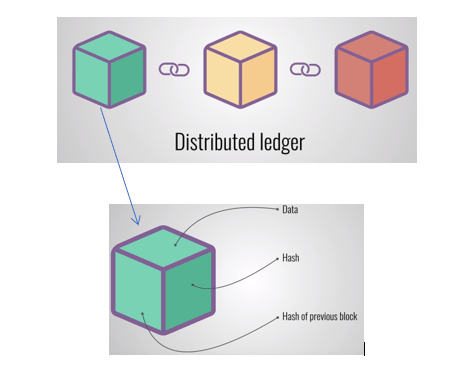
I have talked about basics of Blockchain before on other blogs. Here’s a quick recap – a Blockchain is a time-stamped series of immutable record of data that is managed by a cluster of computers not owned by any single entity. Each of these blocks of data (i.e. block) are secured and bound to each other using cryptographic principles.
This begs the question – why is it so popular? Following are the some of the reasons: –
- It is not owned by a single entity, hence it is decentralized
- The data is cryptographically stored inside
- The BlockChain is immutable, so no one can tamper with the data that is inside the Blockchain
- The BlockChain is transparent so one can track the data if they want to
Public and Private BlockChain
There are two specific kinds of BlockChain.
- Public BlockChain
- Private BlockChain
Public Chains
Public BlockChain are the ones that we are most familiar with. Bitcoin, Ethereum etc. fall in this category and the reason why they are called so is pretty self-explanatory.
They are completely open ecosystems where anyone can take part in the ecosystem. The network also has an in-built incentive mechanism which rewards participants for taking part more thoroughly in the system.
Private Chains
Unlike public BlockChain, these aren’t open to everyone. As a result, people who want to participate in the private chain must gain permission to be a part of this network. This is the reason why private chains are also called “permissioned BlockChain.”
Because of this, there are restrictions to the kind of people who can take part in the consensus.
Private chains have been specifically designed for enterprise needs and offer a lot of features like:-
- Fast transactions
- Privacy
- High security
Healthcare Use Cases:-
Here, among many use cases, I will mention my top 3.
Patient Data Management
Medical records tend to be separated by health agencies, making it impossible to determine a patient’s medical history without consulting their previous care provider. This process can take a significant amount of time and may often result in mistakes due to human error.
Developing a private BlockChain to store all of a patient’s information in one place, making it simpler for patients and doctors to view through their subscription can overcome this challenge. Idea would be that healthcare providers maintain the BlockChain through the Proof of Authority mechanism.
Healthcare Interoperability
Interoperability is a huge problem in the healthcare industry. Organisations like CHIME and HIMSS have been pushing for its development for almost two decades.
Imagine a network on healthcare institutes where they don’t own a patient’s personal data. The data all belong in the BlockChain. The patients are identified via their hash ID which will be their unique identifier. The hashing allows the ID to be unique and secures the privacy of the user.
Clinical Trials and Pharmaceuticals
BlockChain technology will be able to directly increase the quantity and quality of patients recruited for clinical trials in a number of ways. This type of distributed ledger could allow individual patients to store their medical data by anonymous methods, thereby making it visible to trial recruiters, who could then reach out to the patients if their data qualifies for the clinical trial.
It could also streamline the communication between doctors and patients during the trial. BlockChain has the tools to provide smart contracts that endorse transparency and traceability over clinical trial sequences and can provide financial incentives for a patient’s participation and sharing of their data.
BlockChain use cases in healthcare are plentiful and have the ability to transform the sector. In addition to above tracking healthcare professional credentials, billing and chain to stop counterfeit drugs are few other potential use cases of BlockChain technology. The only issue now is getting healthcare providers to adopt the BlockChain systems on a wider scale. Once mass adoption occurs, it will foster the improvement of the entire healthcare system.
 arshadfarhad.io